

Electrocardiogram
Reading Your Heart's Electrical Activity
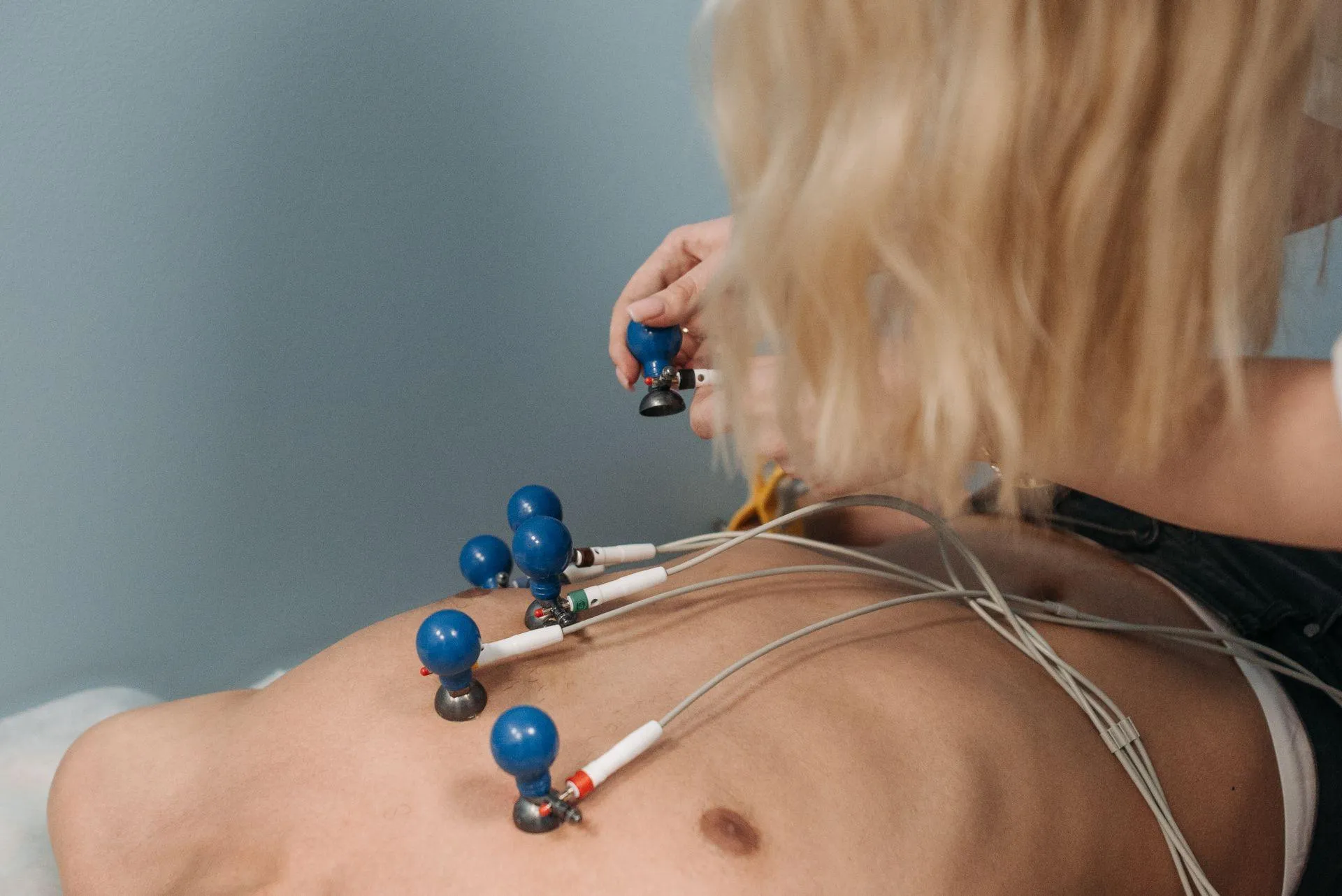
An EKG (also called an ECG or electrocardiogram) is one of the simplest, fastest heart tests we offer at Gilbert Center for Family Medicine. It records the electrical signals your heart produces with every beat and displays them as a wave pattern on paper or a screen. The test takes about 5–10 minutes, is completely painless, and tells your healthcare provider a lot about your heart rhythm and health.
Why did my doctor order an EKG?
An EKG is one of the most commonly ordered tests in medicine. Your healthcare provider may have ordered it for many reasons, including:
Chest pain, chest tightness, or chest pressure
Shortness of breath or difficulty breathing
Heart palpitations (a fluttering, pounding, or racing heartbeat)
Dizziness, lightheadedness, or fainting
Fatigue or unexplained weakness
Routine screening, especially if you have risk factors for heart disease (such as high blood pressure, diabetes, high cholesterol, or a family history of heart disease)
Pre-operative evaluation before a surgery or procedure
Monitoring the effects of certain medications on your heart
Following up on a previous heart problem
What to Expect
You'll lie down on an exam table.
10 small sticky electrode patches are placed on your chest, arms, and legs.
Thin wires connect the patches to the EKG machine — the machine only reads signals; nothing is sent into your body.
You'll lie still for about 30 seconds while the machine records your heart. Then the patches come off and you're done.
Common Questions
Your heart's electrical system generates tiny electrical signals with each beat. An EKG machine detects these signals through electrodes — small, sticky patches placed on your skin. The machine records the signals and displays them as a wave pattern.
Not at all. The patches feel like stickers, and the test itself involves no sensation whatsoever.
An EKG can detect irregular heart rhythms, signs of a past or present heart attack, and certain changes in the heart's electrical system. A normal EKG is reassuring, though some conditions may need additional tests.
Usually the same day. Your care team will review the findings with you before you leave or contact you very soon after.
We appreciate you taking good care of your heart.
A quick test like this can tell us so much.
Questions? Give us a call — we're happy to help.