

Ultrasound
Using Sound Waves to See Inside Your Body
An ultrasound uses safe, painless sound waves to create real-time images of organs and tissues inside your body. It doesn't use radiation, nothing goes inside your body (for most types), and it's one of the most versatile imaging tools in medicine. Ultrasound can look at your abdomen, thyroid, blood vessels, joints, pelvic organs, and more — all in one comfortable, in-office visit.
Why did my doctor order an Ultrasound?
Ultrasound can be used to examine many different areas of the body. Common reasons your doctor may have ordered this test include:
Abdomen
- Evaluating pain or discomfort in the abdomen
- Examining the gallbladder for gallstones
- Checking the liver, kidneys, spleen, or pancreas
- Looking for an aortic aneurysm (an enlargement of the main artery in the abdomen)
Pelvis / Reproductive Organs
- Evaluating pelvic pain
- Examining the uterus, ovaries, or bladder
- Assessing the prostate
Thyroid and Neck
- Evaluating a thyroid nodule or enlarged thyroid
- Examining lymph nodes in the neck
Musculoskeletal
- Evaluating soft tissue masses, cysts, or lumps under the skin
- Assessing tendons, muscles, or joints for injury or inflammation
Vascular
- Checking blood flow in arteries and veins (also called a Doppler ultrasound)
- Screening for deep vein thrombosis (DVT — blood clots in the legs)
- Evaluating varicose veins
What to Expect
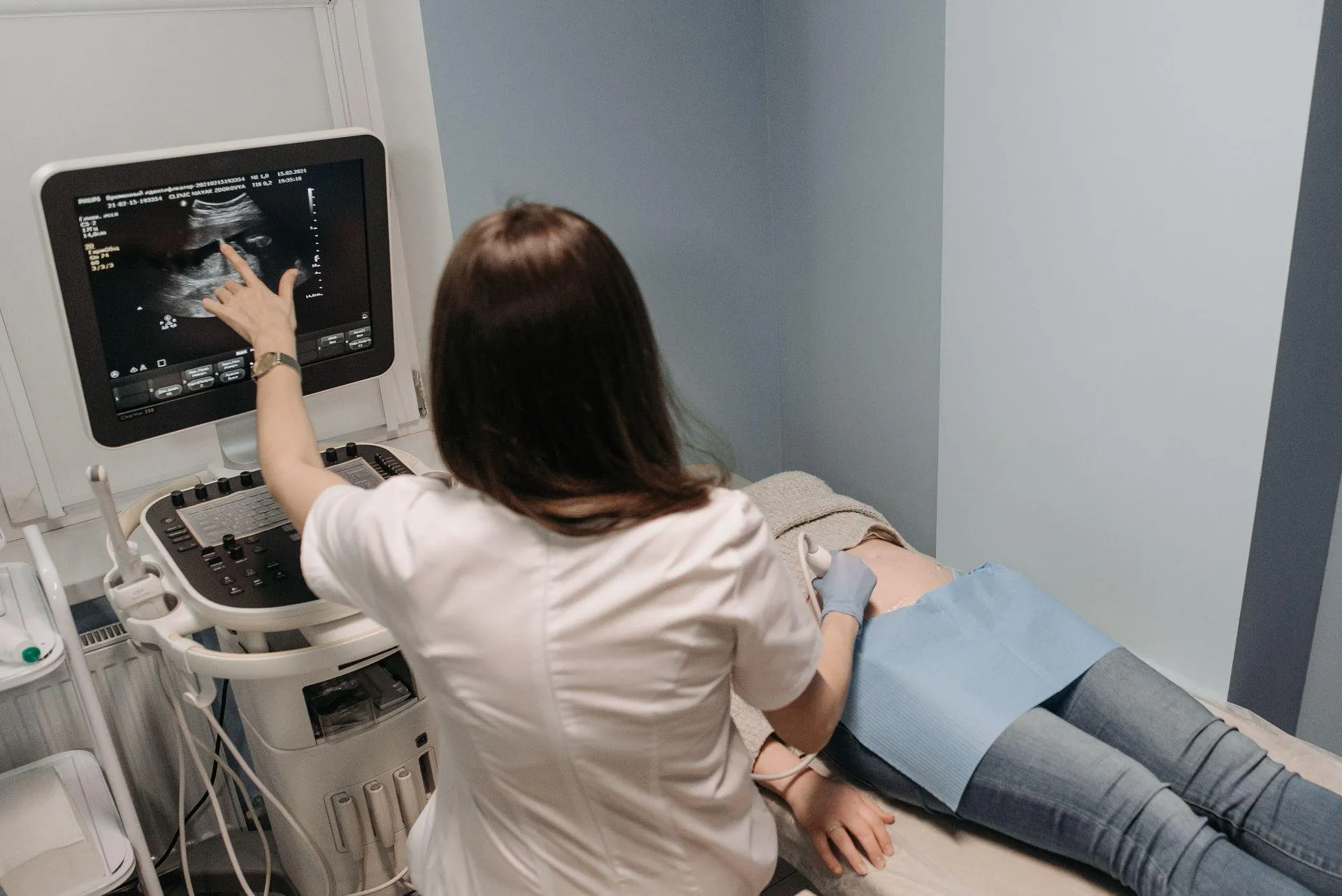
You'll lie on an exam table while a trained technician (sonographer) performs the test.
A clear, warm gel is applied to your skin. This helps the transducer glide smoothly and transmit sound waves clearly.
The transducer is gently pressed against your skin and moved over the area being examined. You may feel mild pressure but no pain.
The sonographer will take still images and short video clips of what they see on the screen.
You might be asked to hold your breath briefly or change positions. Most scans take 20–45 minutes.
Common Questions
It depends on the area being examined. For an abdominal ultrasound, you'll typically need to avoid eating for 4–6 hours beforehand. For a pelvic ultrasound, you may need to arrive with a full bladder. For most other areas, no special prep is needed. We'll let you know exactly what to do when we schedule your appointment.
The test is performed by a sonographer — a specially trained technician. The images are then sent to a radiologist (a physician who specializes in interpreting imaging studies), who reads and reports the findings. Your healthcare provider will receive the report and go over the results with you.
Yes — ultrasound is very safe. It uses sound waves, not radiation, and has been used in medicine for decades with no known harmful effects.
A radiologist (a physician who specializes in imaging) reviews the images and sends a report to your healthcare provider, usually within 3-5 business days. We'll go over the results with you and talk about any next steps.
Yes. No sedation is involved, so you can drive yourself and go about your day right after.
We hope it puts your mind at ease.
Ultrasound is a gentle, effective way to get answers.
Questions? Give us a call — we're happy to help.