

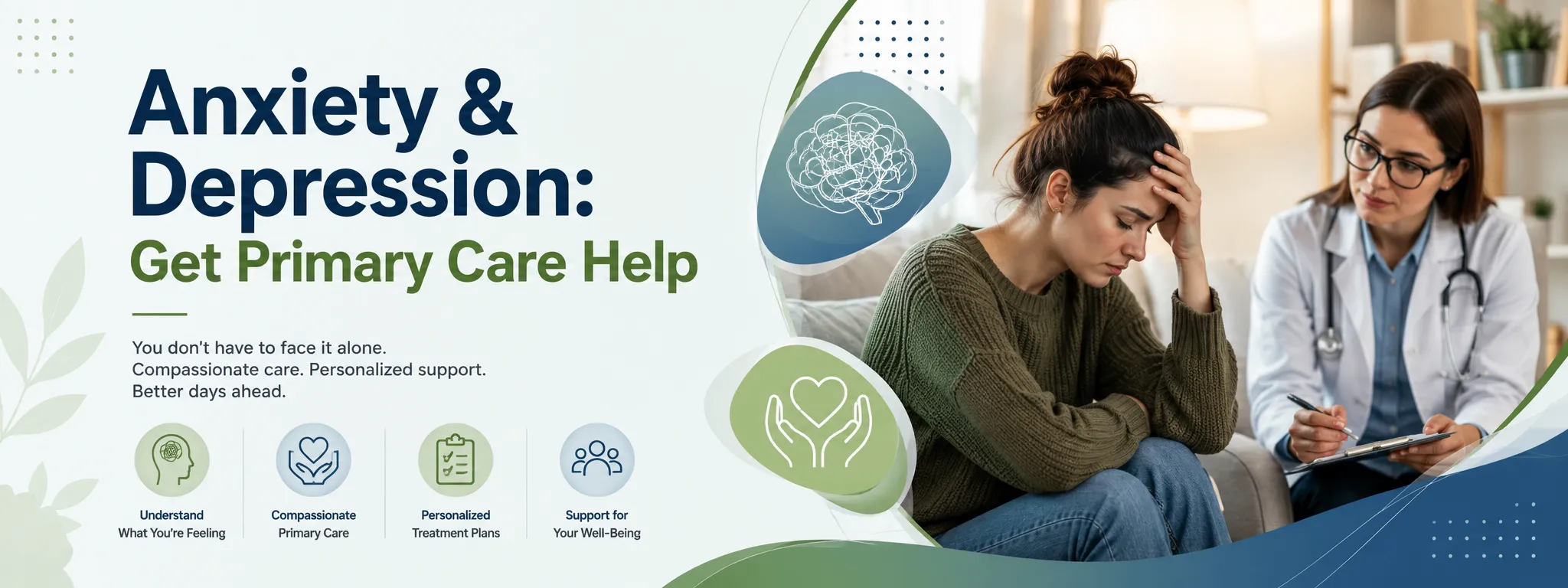

Anxiety & Depression: Get Primary Care Help
Understanding Depression
Depression is more than feeling sad. It’s a medical condition that affects how you think, feel, and function. Symptoms include persistent low mood, loss of interest in activities you once enjoyed, changes in sleep and appetite, difficulty concentrating, feelings of worthlessness, and low energy. Symptoms lasting more than two weeks that interfere with daily life warrant professional attention.
Understanding Anxiety
Anxiety disorders involve excessive worry or fear that is difficult to control and interferes with normal activity. Physical symptoms are common: racing heart, shortness of breath, tension headaches, stomach upset, and trouble sleeping. Generalized anxiety disorder, panic disorder, and social anxiety are all conditions your primary care provider can help evaluate and treat.
What Happens at the Appointment?
Treatment Options
Primary care providers can initiate treatment for mild to moderate anxiety and depression, including therapy referrals, medication when appropriate, and lifestyle strategies. For more complex cases, your provider can coordinate care with a psychiatrist or therapist. If you are are facing mental and or substance abuse crisis call 1-800-662-HELP or visit SAMHSA for free resources near you.
Breaking the Stigma
Mental health conditions are medical conditions. Bringing them up with your doctor is not a sign of weakness. At Gilbert Center for Family Medicine, we treat the whole person, and that includes your emotional wellbeing.
Frequently Asked Questions
How do I know if what I'm feeling is depression or just sadness?
Can my primary care doctor prescribe antidepressants?
What if I don't want medication — are there other options?
Share this post:


0 Comments
No comments yet. Be the first to comment!
Leave a Comment
Your comment will be reviewed by an admin before it appears publicly.