
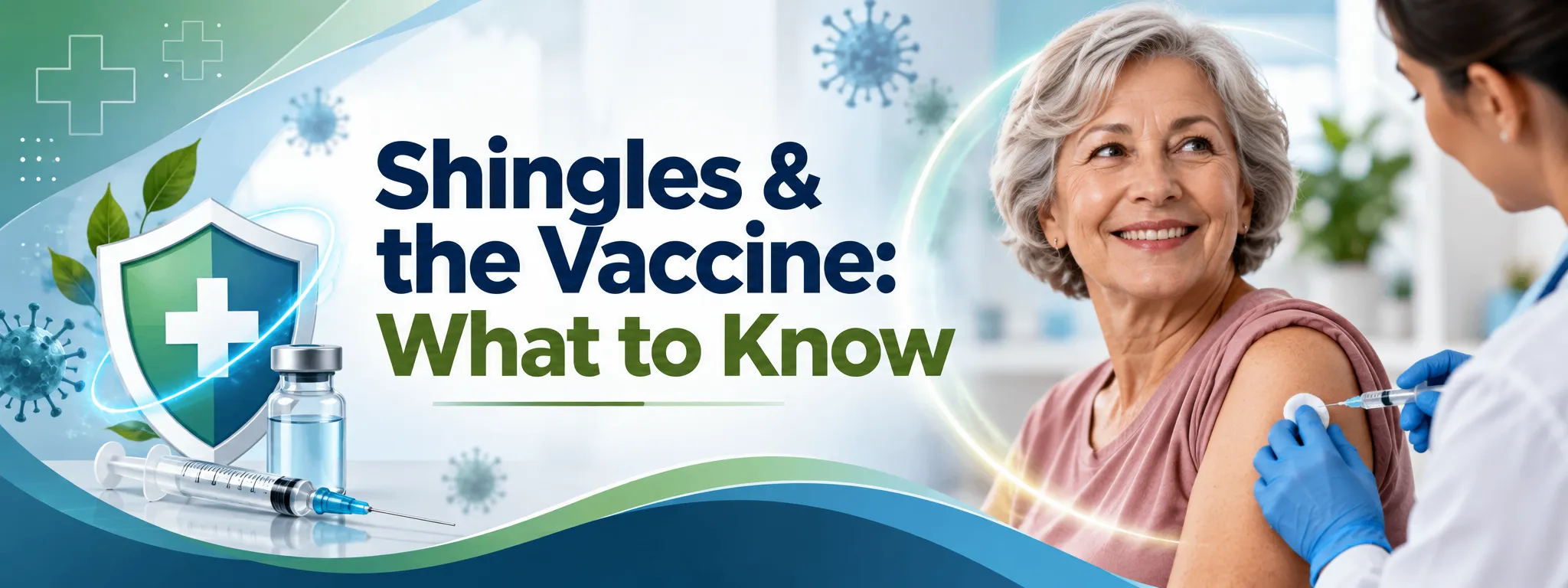

Shingles & the Vaccine: What to Know

Shingles & the Vaccine: What to Know

Shingles affects approximately 1 in 3 Americans during their lifetime — and most of them had no idea they were at risk. If you had chickenpox as a child, the virus is still living dormant in your nervous system. Understanding what shingles is, who it affects, and how to prevent it with a highly effective vaccine is one of the most important conversations you can have with your primary care provider.

What Is Shingles?

Shingles (herpes zoster) is caused by the varicella-zoster virus — the same virus that causes chickenpox. After a chickenpox infection, the virus does not leave your body. It retreats into nerve tissue near your spinal cord and brain, where it can remain dormant for decades. When the immune system weakens — due to age, stress, illness, or certain medications — the virus can reactivate as shingles, traveling along nerve pathways to the skin and causing a painful, blistering rash.

Who Gets Shingles?

Anyone who has had chickenpox is at risk. Risk increases significantly with age — the immune system naturally weakens over time. Approximately half of all shingles cases occur in adults age 60 and older. Other risk factors include a weakened immune system due to HIV, cancer, or immunosuppressive medications; high stress; and certain medical treatments like chemotherapy or long-term corticosteroid use.

Recognizing the Symptoms

Shingles often begins with pain, burning, tingling, or itching on one side of the body or face — sometimes with fever, headache, and light sensitivity. Within a few days, a red rash appears as a stripe or band wrapping around one side of the torso, neck, or face. The rash develops into fluid-filled blisters that break open, crust over, and heal over 2–4 weeks. If you suspect shingles, call your provider promptly — antiviral treatment is most effective when started within 72 hours of rash onset.

Complications of Shingles

Shingles is not just a rash. Its most common complication is postherpetic neuralgia (PHN) — nerve pain that persists for months or years after the rash heals, affecting up to 1 in 5 shingles patients. Other complications include ophthalmic shingles (which can threaten vision), bacterial skin infections, hearing loss, and in rare cases, encephalitis. Risk of complications increases significantly with age.

The Shingrix Vaccine: Who Needs It and When

Shingrix is a two-dose vaccine recommended by the CDC for all healthy adults age 50 and older — regardless of whether they’ve had chickenpox, a prior shingles episode, or the older Zostavax vaccine. The two doses are given 2 to 6 months apart. Shingrix is over 90% effective at preventing shingles and PHN in adults age 50–69, and over 85% effective in adults 70 and older — one of the most effective adult vaccines available. It is also recommended for immunocompromised adults age 19 and older.

What If You Already Have Shingles?

Contact your provider immediately. Antiviral medications — valacyclovir, famciclovir, or acyclovir — can reduce severity and duration if started within 72 hours. After recovering, you should still receive Shingrix — the vaccine is recommended even for people who have already had shingles.

Frequently Asked Questions

Can I get shingles if I received the chickenpox vaccine?
Yes, though it is less common. The chickenpox vaccine contains a weakened live virus that can, in rare cases, lie dormant and reactivate as shingles. However, vaccinated individuals are significantly less likely to develop shingles than those who had natural chickenpox. If you are 50 or older, Shingrix is recommended regardless.
Shingrix requires two doses, 2 to 6 months apart — both are necessary for full protection. Side effects are common and are a sign the vaccine is working: soreness at the injection site, muscle aches, fatigue, headache, shivering, and mild fever, typically lasting 2–3 days. Side effects tend to be stronger after the second dose but are temporary and far preferable to shingles itself.
The rash is contagious, but not in the way most people expect. You cannot give someone else shingles, but you can transmit the varicella-zoster virus to someone who has never had chickenpox or the chickenpox vaccine, causing them to develop chickenpox. Until blisters have fully crusted over, avoid contact with newborns, pregnant women, and immunocompromised individuals.

0 Comments

No comments yet. Be the first to comment!

Leave a Comment

Your comment will be reviewed by an admin before it appears publicly.